
Introduction
Macro-level evaluations of Indonesia’s new curriculum often present a deceptively polished narrative. Indeed, it is easy to fall prey to an urban visual bias that artificially sanitizes national aggregated statistics. Utilizing a rigorous econometric technique known as a Fixed Effects (FE) framework, this study isolates the analysis specifically within rural ecosystems using longitudinal panel data. This article delves deeply into the complex realities underpinning the performance of primary schools (SD) from 2021 to 2025[cite: 1]. The empirical findings conclude that at the grassroots rural level, the *de facto* implementation of the “Emancipated Curriculum” is experiencing an acute structural dysfunction[cite: 1].
An Econometric Portrait of Rural Cognitive Outcomes
The following presents a reconstruction of multi-tiered empirical data capturing the impact of the new curriculum on various baseline competency sub-domains among rural schoolchildren.
Table 1. Panel Fixed Effects Estimations of Curriculum Transitions in Rural Disadvantage Contexts
| INDEPENDENT VARIABLES | (Model 1) Aggregate Numeracy | (Model 2) Algebra (Procedural) | (Model 3) Literature (Reflective) |
|---|---|---|---|
| Emancipated Curriculum | 12.301*** | 17.924*** | 2.408*** |
| (0.171) | (0.252) | (0.213) | |
| Student SES (Socioeconomic) | -0.522*** | -0.591*** | -0.794*** |
| (0.022) | (0.038) | (0.028) | |
| Female | 0.331 | — | — |
| (0.349) | |||
| Constant | 60.711*** | 60.322*** | 85.960*** |
| (1.210) | (2.053) | (1.514) | |
| Observations | 47,662 | 32,068 | 47,914 |
| R-squared (Within) | 0.572 | 0.764 | 0.212 |
| School Clusters | 15,979 | 16,228 | 16,237 |
Table 1 presents the parametric estimations of the FE model, adjusted with heteroskedasticity- and serial correlation-consistent corrections (clustered robust standard errors at the school level)[cite: 1]. This model rigorously accounts for time-invariant unobserved heterogeneity across institutions, ensuring that the captured curriculum transition coefficients remain free from institutional selection bias[cite: 1].
The baseline findings in Model 1 indicate that transitioning to the new curriculum correlates with a massive, aggregate surge of 12.30 points in numeracy scores (p < 0.01)[cite: 1]. On the surface, this figure seems to substantiate claims celebrating the policy’s capacity for rapid cognitive acceleration[cite: 1]. However, a closer deconstruction of Model 2 and Model 3 completely dismantles this linear assumption[cite: 1].
A stark achievement asymmetry is laid bare[cite: 1]. The observed cognitive leap is heavily dominated by the procedural sub-domain of Algebra, which skyrocketed by 17.92 points, backed by an exceptionally robust within-model explanatory power (R-squared within) of 76.4%[cite: 1]. Conversely, in deeper literacy domains such as Literary Text comprehension (Model 3), the impact exhibits functional paralysis, creeping forward by a measly 2.40 points[cite: 1]. This disparity is severely compounded by the socio-economic status variable (Student_SES), which yields a powerful negative coefficient across all models, peaking in the literature sub-domain (-0.794)[cite: 1]. Regardless of structural overhauls to the curriculum, household economic deprivation acts as an uncompromising structural ceiling that thwarts learning recovery for rural children[cite: 1].
The Anatomy of Cognitive Asymmetry
To visualize how the new policy reform engenders sharp disparities across foundational competencies in rural territories, the marginal policy impact points are mapped across specific cognitive sub-domains below[cite: 1].
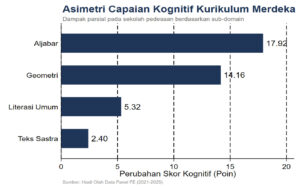
Figure 1 visually synthesizes the landscape of cognitive inequality[cite: 1]. By isolating partial score variations, this visualization pinpoints exactly where the curriculum reform gains traction and where it encounters a state of total structural stagnation[cite: 1].
The visual evidence in Figure 1 confirms an acute structural dysfunction in meeting systemic prerequisites within rural areas[cite: 1]. Viewed through Talcott Parsons’ sociological lens, we observe, first, a profound dysfunction in Goal Attainment[cite: 1]. While the philosophical intent of the reform is to foster holistic, critical thinking, the data reveals a pragmatic, tactical deflection on the ground[cite: 1]. Procedural, rule-bound subjects like Algebra (+17.92) and Geometry (+14,16) are highly compatible with conventional, drill-and-practice teaching modalities[cite: 1]. Pressured by centralized accountability instruments (such as the National Education Report Card), rural educators predictably resort to mechanical shortcuts to artificially optimize quantitative math metrics[cite: 1].
Second, there is a distinct failure in Adaptation[cite: 1]. When confronted with complex, higher-order reflective skills like Literary Text analysis—which merely advanced by 2.40 points—the system suffers functional paralysis[cite: 1]. Mastery of literature demands systemic prerequisites—namely, a rich literacy ecosystem (access to diverse reading materials, nutritional stability, and active parental scaffolding)—which are systematically absent in impoverished rural households due to entrenched SES constraints[cite: 1]. By failing to adapt to these material realities, the new curriculum risks producing a generation of rural students who can effortlessly calculate formulas but remain functionally blind to reflective depth and critical interpretations of their social reality[cite: 1].