
Macro-level educational policies often operate on the assumption that a centralized intervention will yield uniform impacts across all schools. However, is this actually the case? Utilizing longitudinal panel data (2021–2025), this analysis delves into two primary instruments of school leadership governance.
The first is Data-Driven Reflection (RSD)—representing the utilization of the School Education Report Card (Rapor Pendidikan). The second is Instructional Reflection (RPI), which focuses on normative classroom supervision. The findings dismantle the notion of uniform impact, revealing that the effectiveness of school leadership is highly contingent upon the institutional characteristics specific to each educational level.
Data and Analytical Methodology
This study employs a longitudinal dataset analyzed through a Random Effects (RE) panel data regression model, utilizing Cluster-Robust Standard Errors at the school level. This methodology was selected to control for year-to-year dynamics while isolating error variance stemming from localized institutional differences. The dependent variable under examination is the Teacher Instruction Practice Index, while the primary independent variables focus on the two dimensions of principal governance: RSD and RPI.
Analysis
To provide an initial overview of how these interventions function across different institutional setups, the analysis begins with an aggregate model across three secondary education levels: Madrasah Aliyah (MA – Islamic Senior High School), Sekolah Menengah Atas (SMA – General Senior High School), and Sekolah Menengah Kejuruan (SMK – Vocational Senior High School), as detailed in the table below.
| Variable | Model_Madrasah | Model_SMA | Model_SMK |
|---|---|---|---|
| RSD (b) | 0.090 | 0.043 | 0.083 |
| p-value | 0.207 | 0.001 | 0.000 |
| RPI (b) | -0.061 | 0.042 | 0.028 |
| p-value | 0.432 | 0.000 | 0.084 |
| _cons | 54.513 | 53.557 | 47.304 |
| p-value | 0.000 | 0.000 | 0.000 |
In this baseline model without control variables, a strong indication of the superiority of Data-Driven Reflection (RSD) emerges. RSD exhibits a significant positive effect in general high schools (SMA) (0.043; p<0.01) and surges substantially in vocational schools (SMK) (0.083; p<0.01). Conversely, Instructional Reflection (RPI) registers a non-significant negative value in Madrasah Aliyah (MA) and fails to achieve statistical significance in the vocational sector (0.028; p=0.084).
While this baseline model offers a preliminary snapshot, it suffers from severe methodological limitations. The MA sub-sample contains an exceptionally small number of observations (N=100), leading to imprecise estimations characterized by weak p-values (0.207). Furthermore, this model remains highly susceptible to Omitted Variable Bias, as it does not yet account for the schools’ socio-economic and structural backgrounds.
Consequently, to obtain robust, socio-economically unbiased impact estimates, the analysis proceeds to Table 2 by eliminating the MA sub-sample and introducing macro-structural control variables.
| Variable | Model_SMA | Model_SMK |
|---|---|---|
| RSD (b) | 0.081 | 0.046 |
| p-value | 0.000 | 0.024 |
| RPI (b) | 0.053 | 0.016 |
| p-value | 0.000 | 0.361 |
| SES_sekolah (School SES) | 0.158 | -0.075 |
| p-value | 0.000 | 0.001 |
| urban_dummy | ||
| 1 (b) | -0.840 | 1.652 |
| p-value | 0.242 | 0.048 |
| merdeka_dummy | ||
| 1 (b) | 0.019 | 2.558 |
| p-value | 0.982 | 0.001 |
| _cons | 40.699 | 49.887 |
| p-value | 0.000 | 0.000 |
Once the model is adjusted to control for school socio-economic status (SES_sekolah), geographic region (urban_dummy), and curriculum implementation status (merdeka_dummy), the estimated impacts undergo a highly compelling structural shift.
First, RSD establishes itself as a universally effective driver. The adjusted impact of RSD rises sharply in SMA to 0.081 (p=0.000) and remains robustly significant in SMK at 0.046 (p=0.024). This indicates that when structural disparities among schools are neutralized, data-driven school leadership proves categorically capable of enhancing instructional quality across both general and vocational tracks.
Second, RPI reveals structural vulnerability. While RPI remains effective in general education (SMA) (0.053; p=0.000), its impact collapses in the vocational sector (SMK) to 0.016, completely losing statistical significance (p=0.361). Horizontally, the magnitude of RSD consistently outperforms RPI in both general (0.081 > 0.053) and vocational tracks (0.046 > 0.016).
Third, a distinct paradox emerges regarding the impact of the Merdeka Curriculum (Independent Curriculum). The implementation of the Merdeka Curriculum shows no direct impact on teacher quality in general high schools (0.019; p=0.982), yet it triggers a massive, highly significant positive surge in vocational schools (+2.558; p=0.001).
To assist policymakers in navigating this stark divergence in policy outcomes, the fully controlled estimates from Table 2 are visualized in the following OECD-style chart.
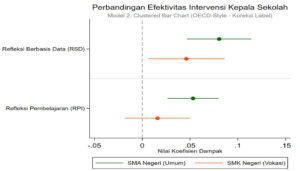
Figure 1 presents a visual mapping that aligns precisely with the controlled regression findings. Displayed through 95% Confidence Interval error bars, the chart visually validates why educational policies must reject a one-size-fits-all framework.
Within the Data-Driven Reflection (RSD) cluster, both the green plot (SMA) and the orange plot (SMK) rest safely to the right of the 0 baseline. This provides visual validation that evidence-based management led by school principals possesses universal efficacy across differing institutional landscapes. Objective data offers clear, actionable guidance for principals to guide their teaching staff effectively.
This stands in sharp contrast to the Instructional Reflection (RPI) cluster below. The confidence interval line for vocational schools (SMK) stretches well to the left, crossing the 0 anchor line. Visually, this confirms why normative pedagogical discussions hit a bottleneck in vocational settings. Capital-intensive, industry-oriented, and highly fragmented vocational ecosystems require technical, operational data-driven interventions rather than abstract conceptual reflections confined to traditional classroom structures.
Policy Recommendations
Based on these empirical insights, two strategic recommendations are proposed for central governance. First, relevant ministries must cease managing vocational schools through the lens of general education. Vocational school principals require highly specialized metrics within the School Education Report Card—such as industry absorption rates and workshop facility readiness—rather than purely academic indicators, enabling the leverage of RSD in vocational tracks to match the heights seen in general tracks. Second, the expansion of vocational curriculum autonomy is vital. The massive success of the Merdeka Curriculum in vocational schools (+2.558) demonstrates that vocational instructors benefit immensely from reduced administrative constraints. The flexibility to synchronize curricula directly with industry demands is a critical mechanism that must be actively sustained and expanded.