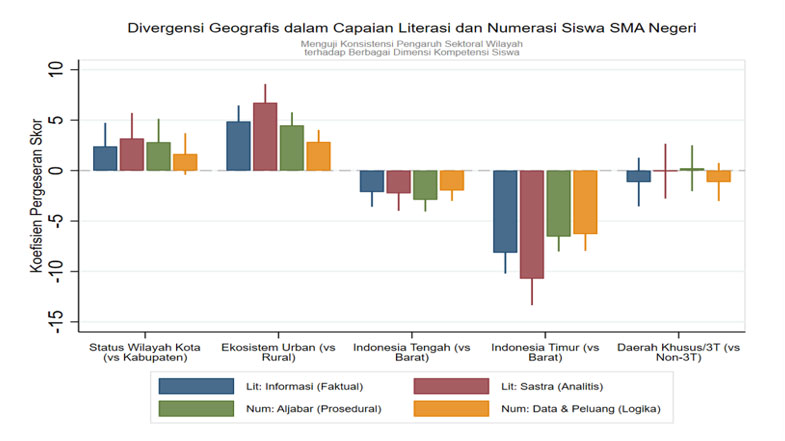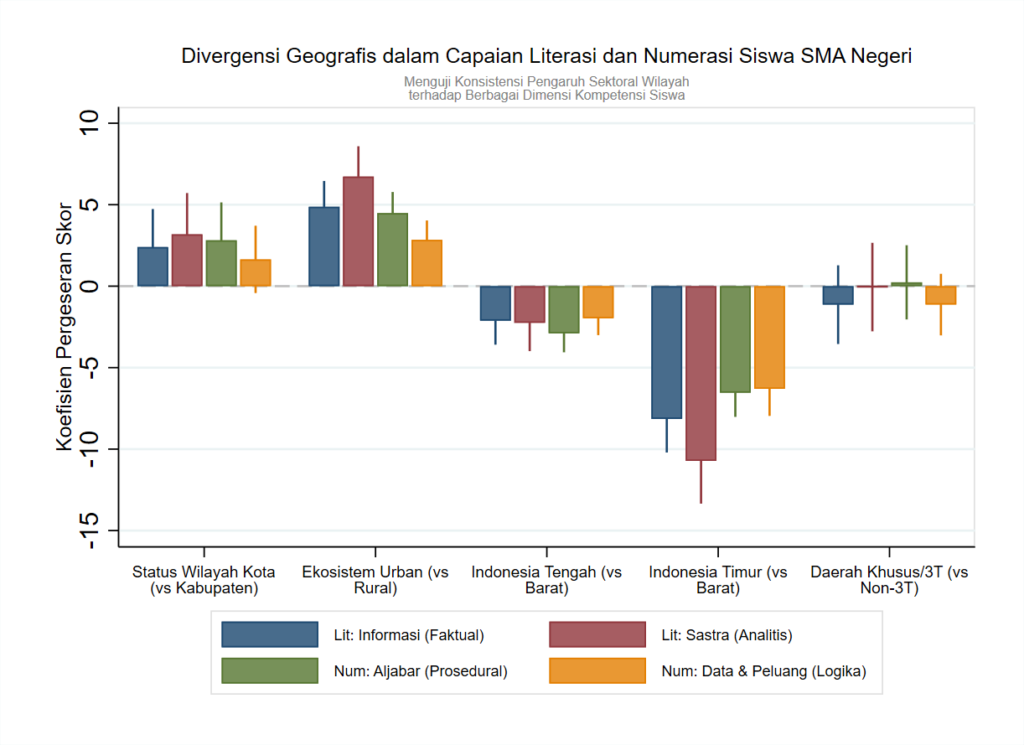
This study examines the spatial impact of Indonesia’s Kurikulum Merdeka on rural primary students using a longitudinal Fixed Effects model (2021–2025) across Western, Central, and Eastern regions. The findings reveal a stark policy divergence. In numeracy, the curriculum drives universal, highly significant gains (p<0.01) nationwide, demonstrating the power of streamlined institutional instruction. Conversely, literacy gains stall completely in Eastern Indonesia (0.633, p>0.1). Critical Realist analysis reveals that household-level poverty acts as a structural ceiling, neutralizing administrative reforms. Consequently, closing the regional cognitive gap demands structurally affirmative interventions—such as nutritional support and targeted logistics—rather than mere curricular changes